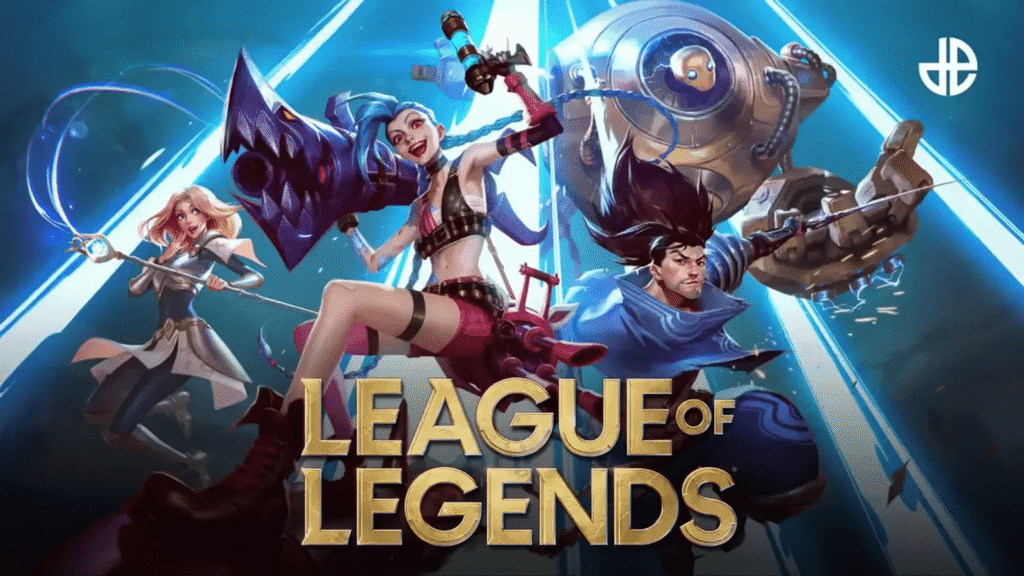
If you’ve been anywhere near the gaming world in the last decade, you’ve heard of League of Legends. Whether it’s through esports tournaments with jaw-dropping prize pools, iconic characters like Ahri and Yasuo, or just hearing your friends yell “GG” after a ranked meltdown, LoL has become a global phenomenon.
Developed by Riot Games and released in 2009, League of Legends started as a simple idea — a multiplayer online battle arena (MOBA) inspired by Defense of the Ancients (DotA). Fifteen years later, it’s one of the most played, most competitive, and most influential games on the planet. But what exactly keeps it alive? And why do millions of players still log in daily despite its steep learning curve (and occasional rage moments)?
Let’s break it down.
The Basics: What Is League of Legends?
At its core, League of Legends is a 5v5 strategic battle between two teams on a map called Summoner’s Rift. The goal? Destroy the enemy team’s Nexus, which sits deep within their base.
Each player selects a Champion — a unique character with their own abilities, style, and lore. With over 160 champions (and counting), there’s a playstyle for everyone: from tanky frontliners and stealthy assassins to powerful mages and supportive healers.
But LoL isn’t just about fighting. It’s about teamwork, timing, and decision-making. You can have perfect mechanics, but if your team isn’t coordinated, you’re probably watching your Nexus explode in flames.
How It Works: The Three Lanes and the Jungle
League’s iconic map is divided into three lanes — Top, Mid, and Bottom (Bot) — with a jungle in between. Each role has its own identity, rhythm, and responsibility.
Top Lane
Often home to tanks, bruisers, or split-pushers, this lane is about patience and solo duels. You’re usually isolated from the team, battling your opponent for lane dominance. Top laners are the quiet strength of a team — they either carry late game or soak up damage while everyone else shines.
Mid Lane
Mid is the flashy role. It’s home to assassins and mages — characters that can burst enemies and roam across the map. Mid laners often dictate tempo; they’re the ones who decide when to rotate, gank, or pressure objectives.
Bot Lane (ADC + Support)
The bot lane is a duo — an Attack Damage Carry (ADC) and a Support. The ADC dishes out consistent damage in fights, while the Support protects, heals, or sets up plays. It’s a relationship built on synergy — or in many cases, frustration.
Jungle
The jungler is the wild card. They move unseen through the forest, killing monsters for gold and looking for opportunities to ambush enemy lanes. A good jungler can control the flow of the game — and a bad one? Well, let’s just say they’ll hear about it in chat.
Why League of Legends Became a Phenomenon
1. Constant Updates and Balance Changes
Riot doesn’t let the game stagnate. Every few weeks, champions are adjusted, items reworked, and meta strategies shift. This ensures no single playstyle dominates forever. It keeps players experimenting, arguing, and — most importantly — coming back.
2. Free-to-Play, Fair-to-Compete
From day one, LoL has been free-to-play, relying on cosmetic skins for revenue. No pay-to-win mechanics, no stat boosts — just skill, teamwork, and a bit of luck. This accessibility helped it spread worldwide, from dorm rooms to esports arenas.
3. A Deep, Expanding Universe
Riot Games has done something few developers have pulled off: turning a competitive game into a living universe. Every champion has lore, connected regions, and backstories. Over time, this world — called Runeterra — has expanded into comics, music, and even animated series.
When Arcane released on Netflix in 2021, it didn’t just appeal to gamers — it won Emmy Awards and brought new fans into the fold. Suddenly, names like Jinx, Vi, and Caitlyn became pop culture icons.
The Esports Revolution
It’s impossible to talk about League of Legends without mentioning its esports empire.
Riot transformed LoL into a global spectator sport. Every year, the League of Legends World Championship (Worlds) draws millions of viewers — rivaling even traditional sports finals. The production quality, crowd energy, and storytelling make it feel like a hybrid of chess and rock concert.
Teams like T1 (formerly SK Telecom) and Fnatic have become legendary, with players like Faker — often called the “Michael Jordan of esports” — cementing their place in gaming history.
Watching Worlds isn’t just about gameplay; it’s about narrative. You follow underdogs, rivalries, redemption arcs — everything that makes competition thrilling.
The Emotional Rollercoaster of Ranked Mode
For casual players, League can be fun and chaotic. For ranked players… it’s personal.
Ranked mode divides players into skill tiers — Iron, Bronze, Silver, Gold, Platinum, Diamond, Master, Grandmaster, and Challenger. Climbing the ranks is both exhilarating and infuriating. You’ll experience triumph one game and utter despair the next.
There’s a reason “League rage” is practically a meme. But the truth is, that intensity is part of what makes it addictive. Every victory feels earned. Every defeat feels like a lesson (eventually). And when you finally hit that next division, it feels better than any loot box reward.
Champions and Playstyles: There’s a Role for Everyone
One of LoL’s biggest strengths is its diversity of champions and mechanics.
- For Strategists: You might enjoy champions like Orianna or Twisted Fate, where positioning and decision-making matter more than raw mechanics.
- For Brawlers: Try Darius or Sett — champions that love getting in the thick of it.
- For Supportive Players: If you prefer helping your team shine, Soraka, Lulu, or Thresh offer rewarding, tactical gameplay.
- For Assassins: Zed, Katarina, and Talon let you live out your stealthy power fantasy — at least until you get crowd-controlled.
The sheer variety means no two matches ever feel the same. You can experiment endlessly, switching between calm strategizing and chaotic brawls depending on your mood.
The Dark Side: Toxicity and Burnout
No honest discussion about League of Legends is complete without acknowledging its darker side.
The competitive nature of the game breeds toxicity — angry players, blame games, and tilted teammates are part of the experience. Riot has made major improvements in reporting systems and player behavior tracking, but frustrations still flare up often.
Then there’s burnout. The grind of ranked play, the emotional highs and lows, and constant patches can overwhelm even long-time players. Many take breaks — only to return months later. Because as much as League frustrates you, it also hooks you in ways few games can.
Riot’s Expanding Universe: More Than Just a MOBA
Riot has taken League of Legends far beyond its original map.
- Teamfight Tactics (TFT): A strategic auto-battler set in the LoL universe.
- Legends of Runeterra: A collectible card game exploring the lore of Runeterra.
- VALORANT: A tactical shooter that shares LoL’s competitive DNA (and explosive popularity).
- Arcane (Netflix): The Emmy-winning animated series that expanded the LoL world for mainstream audiences.
Riot isn’t just making games — it’s building an ecosystem.
Why Players Keep Coming Back
After all the nerfs, rage quits, and meta shifts — why do millions still log in every day?
Because League of Legends delivers something few games manage: a sense of mastery. It’s a challenge that never truly ends. Each match is a new puzzle — a mix of instinct, skill, and adaptability.
The satisfaction of improving, of syncing perfectly with your team for a game-winning fight, is unmatched. And whether you play casually or competitively, LoL gives you stories — those unforgettable games where you carried, clutched, or came back from defeat.