If there’s one name that transcends gaming generations, it’s Mario. The red-capped plumber from Brooklyn has been jumping, sliding, and stomping his way into hearts since the 1980s. From pixelated pipes to open-world adventures, Super Mario Bros isn’t just a franchise — it’s a cultural icon that shaped how we think about games.
Whether you played it on the NES, the Nintendo Switch, or even your phone, Super Mario Bros carries that same sense of joy: simple mechanics, colorful worlds, and the thrill of discovery.
Let’s dive into why this classic series remains just as magical in 2025 as it was on the day it first launched.
The Birth of a Legend
From Arcade Roots to Home Consoles
Before Super Mario Bros changed the world, Mario was already making appearances — first in Donkey Kong (1981) and later in Mario Bros (1983). But it was the release of Super Mario Bros for the Nintendo Entertainment System (NES) in 1985 that turned him into a household name.
Created by Shigeru Miyamoto and Takashi Tezuka, the game broke barriers. It was one of the first side-scrolling platformers that truly felt like an adventure. Every world, from the green plains of World 1-1 to the fiery castles of Bowser, offered new surprises.
Mario wasn’t just jumping over obstacles — he was pioneering the idea of exploration in gaming.
A Game That Saved an Industry
It’s easy to forget, but in the early 1980s, the video game industry was collapsing. Over-saturation and poor-quality games (yes, we’re looking at you, E.T. for Atari) had turned people away.
Then Super Mario Bros arrived — polished, imaginative, and perfectly designed. It sold over 40 million copies, revitalizing home gaming and putting Nintendo at the center of the entertainment world.
The game’s success didn’t just make Mario famous — it proved that gaming could be art, business, and joy all at once.
The Evolution of Super Mario
From 2D Pixels to 3D Worlds
Every generation of Nintendo consoles brought a new kind of Mario magic.
Super Mario Bros. 3 (1988) refined the formula with power-ups like the Tanooki Suit, creative level design, and a world map system that made every playthrough exciting.
Super Mario World (1990) introduced Yoshi, turning the sidekick into one of gaming’s most beloved characters.
Then came Super Mario 64 (1996) — the jump to 3D that changed gaming forever. For the first time, players could explore freely, experiment with camera movement, and truly feel immersed in a 3D space.
The Modern Era: Creativity Unleashed
Mario didn’t stop evolving. Games like Super Mario Galaxy, Super Mario Odyssey, and Super Mario Maker expanded what was possible.
- Galaxy took Mario to outer space, introducing gravity-bending levels and orchestral music.
- Odyssey turned Mario into a globe-trotting explorer with his sentient hat, Cappy, letting players possess enemies and objects in wildly creative ways.
- Super Mario Maker flipped the script — letting fans design, share, and play their own Mario levels.
Each title carried that familiar “Mario feel,” but also pushed boundaries. It’s a delicate balance of nostalgia and innovation — something few franchises manage this well.
The Formula That Works: Simple, Smart, and Fun
At its heart, Super Mario Bros is about movement and joy.
Mario’s jump — arguably gaming’s most famous mechanic — isn’t just a button press. It’s a piece of design genius. The timing, momentum, and feedback are so finely tuned that every leap feels satisfying.
Combine that with tight controls, clever level design, and an infectious soundtrack, and you’ve got a game that anyone — from kids to seasoned gamers — can enjoy.
Miyamoto once said he designs Mario games like playgrounds: they should encourage curiosity, creativity, and problem-solving. That’s why even today, replaying World 1-1 feels like coming home.
Iconic Characters and Timeless Worlds
The Mushroom Kingdom Cast
The Super Mario Bros universe has one of the most recognizable casts in entertainment:
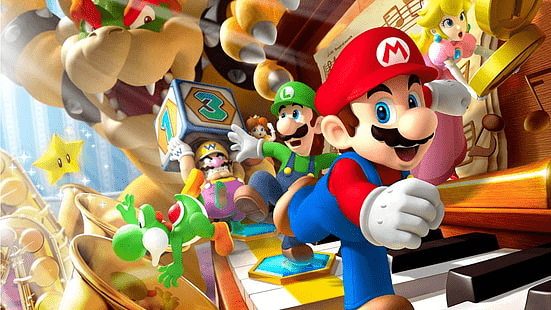
- Mario – The brave, everyman hero with a mustache and a mission.
- Luigi – The taller, jumpier brother who’s earned his own loyal fanbase.
- Princess Peach – Once the damsel in distress, now a capable hero in her own right.
- Bowser – The fiery king of Koopas who can’t help but make things complicated.
- Toad, Yoshi, and Donkey Kong – Each bringing their own charm and personality.
Even side characters like Wario and Waluigi have become internet icons — proof that Mario’s world has something for everyone.
A World Built on Imagination
From grassy fields to haunted mansions, lava castles, and cloud kingdoms — every Mario game introduces worlds that feel whimsical yet distinct.
Each level teaches through play. You don’t need tutorials because the design itself explains the rules. That’s what makes Mario timeless — it doesn’t rely on words; it relies on wonder.
Super Mario Beyond Gaming
From Game to Pop Culture
Super Mario isn’t just a video game — it’s a global brand. The mustached plumber has appeared on cereal boxes, clothes, theme parks, and more.
The Super Mario Bros. Movie (2023) brought Mario to the big screen again — this time successfully. Starring Chris Pratt, Anya Taylor-Joy, and Jack Black, it became one of the highest-grossing animated films ever.
It captured the humor, nostalgia, and adventure that made the games great — proving that Mario’s appeal isn’t just for gamers but for anyone who loves imaginative storytelling.
Nintendo’s Theme Park Dream
In 2021, Nintendo opened Super Nintendo World in Japan, followed by expansions in Hollywood and Orlando. Fans can literally step inside the Mushroom Kingdom — punch blocks, ride a Mario Kart, and collect coins with a real-life wristband.
It’s the ultimate celebration of a series that’s been connecting generations for nearly four decades.
Why Super Mario Bros Still Matters in 2025
1. Timeless Design
While gaming technology changes rapidly, Super Mario Bros proves that strong fundamentals never age. Its core gameplay — run, jump, explore — is as fun now as it was in 1985.
2. Accessibility
Mario games have always been easy to learn but hard to master. That balance welcomes newcomers while keeping veterans engaged. Whether you’re 5 or 50, you can pick up a controller and have fun.
3. Innovation With Heart
Nintendo never rehashes Mario carelessly. Every new release adds a twist — new mechanics, ideas, or creative settings — while staying true to its roots. That’s why fans trust Mario games to deliver.
4. Shared Experience
Few games unite people like Mario does. Parents who grew up with the NES now introduce their kids to the same worlds — often playing together on the Switch. It’s not just nostalgia; it’s legacy.
The Music, The Joy, The Feeling
There’s something magical about hearing the first few notes of the Mario theme. Composed by Koji Kondo, it’s one of the most recognizable melodies in the world.
The upbeat rhythm perfectly matches the game’s pacing — cheerful yet adventurous. Every coin sound, jump echo, and power-up jingle feels satisfying. It’s audio design that’s both functional and emotional.
Music in Mario games isn’t background noise — it’s part of the experience. It makes you smile, hum along, and remember that games can be pure fun.
The Future of Mario
As of 2025, the Mario universe is busier than ever. Nintendo continues expanding with titles like Super Mario Bros. Wonder and rumored VR experiments that could let players explore the Mushroom Kingdom in immersive 3D.
But no matter how technology evolves, Mario’s magic lies in something simple — joy. The kind that makes you grin when you stomp a Goomba, discover a secret warp zone, or rescue Peach (again).
With over 600 million Mario games sold worldwide, it’s safe to say he’s not slowing down anytime soon.