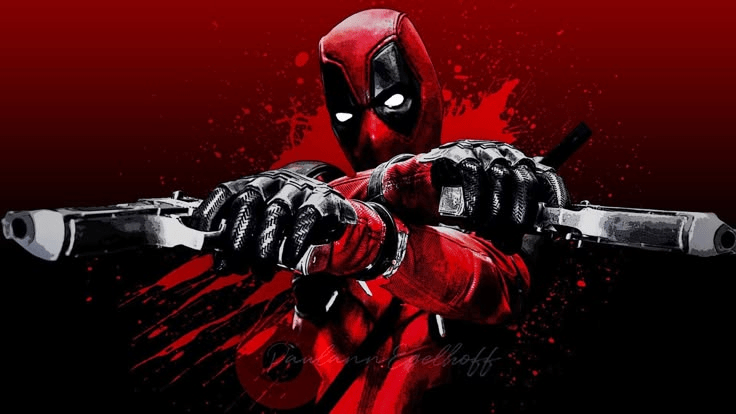
When it comes to comic book characters, few are as unpredictable, outrageous, or self-aware as Deadpool. He’s not your typical hero—or villain, for that matter. He’s crude, hilarious, and sometimes horrifying, yet somehow manages to be one of Marvel’s most loved icons. Beneath all the madness lies a surprisingly complex figure who’s as much a tragedy as he is a comedy.
Let’s dive deep into the facts, history, and hidden details about the man in red who never stops talking: Wade Wilson, the one and only Deadpool.
Who Exactly Is Deadpool?
Origins and Creation
Deadpool first appeared in the early 1990s, born from the creative chaos of Marvel’s most experimental era. He was originally introduced as a villain in New Mutants #98, designed as a high-tech mercenary with an attitude.
Created by writer Fabian Nicieza and artist Rob Liefeld, Deadpool was initially intended to be a parody of DC’s Deathstroke—right down to the similar name. Deathstroke is “Slade Wilson”; Deadpool became “Wade Wilson.” From there, his story took on a life of its own.
While early versions painted him as just another gun-for-hire, his unpredictable humor, constant fourth-wall-breaking, and deep emotional layers made him evolve into something far more unique. Over time, he transitioned from a one-off villain to one of Marvel’s most iconic antiheroes.
The Powers and Abilities That Make Him So Dangerous
A Healing Factor Beyond Belief
Deadpool’s most famous trait is his regenerative healing ability. It’s not just good—it’s borderline ridiculous. He can recover from bullet wounds, burns, explosions, and even decapitation. There are multiple storylines where he’s been completely vaporized, only to regrow later.
Ironically, his healing factor isn’t perfect. While his body repairs itself constantly, his brain heals in strange ways, leaving his mind fragmented. This regeneration is what keeps him alive—but it’s also part of what drives him a little insane.
Expert Assassin and Fighter
Before gaining his powers, Wade Wilson was already a highly skilled operative. Trained in assassination, espionage, and multiple martial arts, he’s one of the best mercenaries in Marvel’s universe. Add his healing and agility to that, and you’ve got someone who can fight, fall, and get back up laughing.
He’s equally proficient with firearms, swords, explosives, and just about anything sharp or loud. His blend of chaos and technique makes him impossible to predict in battle.
Not Technically a Mutant
Although he’s often grouped with the X-Men and other mutants, Deadpool isn’t a natural-born mutant. His powers were artificially given to him through experiments connected to the same program that enhanced Wolverine. That’s why the two share similar healing traits—but very different personalities.
Deadpool’s Unmistakable Personality
The King of Chaos and Comedy
Deadpool’s humor is his armor. He cracks jokes during fights, mocks enemies while dodging bullets, and even teases his own storylines. He’s one of the only comic book characters who knows he’s in a comic book—and uses that knowledge for laughs and strategy.
Breaking the fourth wall is his trademark move. He’ll talk directly to the audience, argue with narrators, and complain about lazy writing or overused tropes. This self-awareness sets him apart from nearly every other hero in pop culture.
Flaws That Make Him Human
Behind all the wisecracks, Deadpool is deeply flawed. His mental health is fragile; he suffers from trauma, guilt, and identity issues. He jokes to hide pain, mocks others to deflect from his insecurities, and often questions his own sanity.
These emotional fractures are what make him relatable. Despite being nearly immortal, Deadpool is constantly at war with himself—torn between wanting to be a better person and knowing he might never truly get there.
Friends, Enemies, and Everything In Between
Weasel – The Shady Best Friend
Weasel is Deadpool’s longest-running ally and occasional betrayer. A former tech genius and weapons supplier, Weasel often finds himself stuck between helping Deadpool and being used as comic relief. Their friendship is dysfunctional, funny, and sometimes heartbreaking.
Blind Al – The Roommate from Hell
Blind Al is an elderly blind woman who lives with Deadpool in a bizarre mix of friendship and captivity. She’s one of the few people who can dish out insults to Wade and get away with it. Their relationship is both darkly funny and oddly tender—a glimpse at Deadpool’s humanity hidden under all that sarcasm.
T-Ray – The Enigmatic Rival
T-Ray is one of Deadpool’s deadliest enemies and claims to be the “real” Wade Wilson. This revelation adds layers of mystery to Deadpool’s backstory, suggesting that his entire identity might be based on a lie. Whether it’s true or not, the rivalry highlights Wade’s constant struggle with who he really is.
Romances and Lost Loves
Deadpool has had his fair share of love interests—from mutant heroes to mystical beings. His most notable and recurring romance is with Death herself (yes, the literal embodiment of Death). Their strange relationship adds a poetic twist: the man who can’t die falls in love with the very concept of it.
Deadpool Beyond the Comics
The Movie Legend: Ryan Reynolds’ Masterpiece
It’s impossible to talk about Deadpool without mentioning Ryan Reynolds, who perfectly captured his humor and chaos on the big screen. Reynolds fought for years to make a proper Deadpool movie after a failed attempt in an earlier X-Men film.
When the 2016 Deadpool movie finally hit theaters, it redefined superhero cinema. With its R-rating, brutal humor, and meta commentary, it became a massive success—and Deadpool 2 only expanded on that. Reynolds’ performance nailed the heart of the character: violent, hilarious, and strangely emotional.
A third installment, now connected to the Marvel Cinematic Universe, promises to bring Deadpool face-to-face with characters fans never thought possible. It’s clear the Merc with a Mouth isn’t going anywhere anytime soon.
Gaming and Appearances
Deadpool has appeared in several video games, from solo adventures to team-based brawlers. His in-game dialogue is just as chaotic as his comic book self—often mocking the player, the developers, or even the idea of being in a game at all.
He’s also been featured in animated shows, crossover events, and comic collaborations, often stealing every scene he’s in.
Why Deadpool Works So Well
Balancing Humor and Heart
Deadpool is chaos personified, yet at his core, he’s deeply emotional. The humor works because it’s a shield. When he makes fun of pain, loss, or death, it feels like a coping mechanism. His story reminds us that laughter can coexist with sadness—that humor doesn’t always mean happiness.
Meta Storytelling Done Right
By breaking the fourth wall, Deadpool adds a layer of commentary to every story he’s in. He makes fun of clichés while living through them, mocks villains while being one, and jokes about his own immortality in the middle of a fight. That awareness keeps his stories fresh and self-aware, even when they border on absurdity.
A Mirror to the Audience
Deadpool resonates because he reflects our contradictions. We all use humor to hide pain sometimes. We all act recklessly when we feel trapped. Through his insanity, he mirrors real emotion—showing that imperfection doesn’t make us less human.