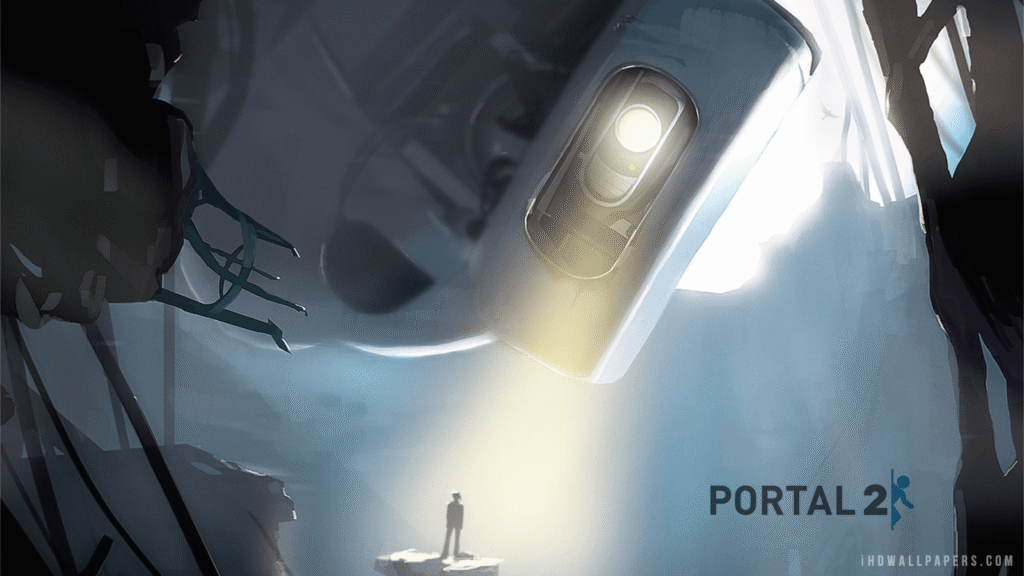
When Valve released Portal 2 in 2011, it wasn’t just another sequel—it was a statement. It proved that video games could be funny, emotional, and intellectually challenging all at once. Building on the cult success of the original Portal, this follow-up expanded the world, deepened the story, and elevated puzzle design to an art form.
Over a decade later, Portal 2 remains one of the most beloved and timeless puzzle games ever made. It’s not just about solving challenges—it’s about experiencing an unforgettable journey through science, sarcasm, and friendship (with a few deadly lasers along the way).
Let’s break down why Portal 2 continues to hold a special place in the hearts of gamers, how it evolved from its predecessor, and what makes it a masterpiece worth revisiting.
The Story: Trapped in Science, Set Free by Curiosity
The Return to Aperture Science
You once again step into the shoes of Chell, the silent test subject who somehow keeps surviving one catastrophic experiment after another. After the events of the first Portal, she wakes up in the crumbling ruins of Aperture Science—a massive underground facility where science went too far, too fast.
Guided by Wheatley, a bumbling yet lovable personality core voiced by Stephen Merchant, Chell tries to escape. But things go south quickly when she accidentally reawakens GLaDOS, the facility’s homicidal AI from the first game.
And just like that, the experiments begin again—only this time, everything is bigger, funnier, and far more dangerous.
GLaDOS: The Perfect Antagonist
Few villains in gaming are as iconic as GLaDOS. She’s equal parts terrifying and hilarious, mocking you constantly with biting remarks as you solve her deadly tests. Yet beneath all the sarcasm, there’s a strange emotional depth. As Portal 2 unfolds, you begin to see glimpses of humanity behind her machine façade.
Her rivalry—and eventual reluctant partnership—with Chell drives the story forward in ways that are both comedic and surprisingly touching.
Wheatley’s Role in Chaos
While GLaDOS is sharp and calculating, Wheatley is her opposite—well-meaning but catastrophically incompetent. His humor and energy give the game a refreshing contrast, especially as he takes center stage in the second half of the story.
Without spoiling too much, let’s just say Wheatley’s ambitions quickly outgrow his abilities, and the results are both hilarious and catastrophic.
The writing in Portal 2—crafted by Valve’s legendary narrative team—balances absurd comedy with moments of genuine tension and emotion. It’s storytelling through gameplay, delivered with precision timing and wit.
Gameplay: Puzzles That Make You Feel Smart
The Magic of the Portal Gun
At its core, Portal 2 revolves around one of gaming’s most brilliant mechanics: the Aperture Science Handheld Portal Device, or simply, the Portal Gun. You create two connected portals—one orange, one blue—and anything that enters one instantly exits the other.
This simple concept creates nearly infinite puzzle possibilities. Need to cross a chasm? Fire a portal to the other side. Want to launch yourself across the room? Place one on the floor and another on the wall, then use physics to fling yourself.
It’s a mechanic that makes you think differently—not just about the game, but about space, gravity, and momentum itself.
New Elements, New Challenges
Valve didn’t settle for repeating the same tricks. Portal 2 introduces new puzzle elements that make each test chamber feel fresh and unpredictable:
- Excursion Funnels – tractor beams that carry you (or objects) through midair.
- Aerial Faith Plates – springboards that launch you across the room in glorious slow motion.
- Thermal Discouragement Beams – deadly lasers that require precise redirection with cubes.
- Repulsion, Propulsion, and Conversion Gels – colored paints that alter surfaces, letting you bounce, speed up, or create portal-friendly walls.
These gels, in particular, are genius. They turn environments into dynamic, living puzzles—encouraging experimentation and creativity.
Every new mechanic builds naturally upon the last, teaching players through experience rather than hand-holding tutorials. That’s what makes Portal 2 so satisfying: you learn, adapt, and feel clever every step of the way.
Perfect Difficulty Curve
Unlike many puzzle games that spike in frustration, Portal 2 nails its difficulty balance. Each level feels achievable, yet challenging enough to give you that “aha!” moment when you finally figure it out.
Even players who aren’t puzzle enthusiasts find themselves hooked, thanks to the intuitive design and clever humor that eases the tension. Valve’s approach ensures the learning curve feels organic—you never feel lost, only curious.
Cooperative Mode: Two Brains Are Better Than One
Meet Atlas and P-Body
After you finish the main campaign, Portal 2 offers an entirely new experience through its co-op mode. Instead of Chell, you and a friend play as two charming test robots: Atlas (the short, round one) and P-Body (the tall, skinny one).
Together, you tackle puzzles that can only be solved with teamwork and communication. You each have your own set of portals, meaning there are four in total—doubling the complexity and fun.
Communication Is Key
Co-op in Portal 2 is pure genius because it doesn’t rely on reflexes or competition—it relies on trust, timing, and teamwork.
You’ll constantly find yourself laughing (or arguing) as you accidentally drop your partner into a pit of acid or send them flying off a platform. Yet when you finally coordinate perfectly and solve a tough puzzle together, the satisfaction is unmatched.
The Humor Continues
GLaDOS also returns in co-op mode, this time as your twisted supervisor. Her commentary on teamwork (and her subtle attempts to turn you against each other) is comedy gold. The dynamic between her snark and your cooperation makes the mode feel like a separate game in itself.
World-Building: Aperture Science in All Its Glory
A Beautifully Broken Facility
In the first Portal, Aperture Science felt sterile and confined. Portal 2 blows that world wide open. The facility is now collapsing, vines crawling through walls, and the once-pristine labs lying in ruins.
You move through test chambers, maintenance tunnels, and even the old industrial foundations of Aperture’s early days. Each area tells a story without a single cutscene. Environmental storytelling is at its finest here—you’ll stumble upon old company logos, audio logs, and rooms that reveal the company’s darkly humorous history.
Cave Johnson: The Legend
One of the highlights of the game is the introduction of Cave Johnson, the eccentric founder of Aperture Science, voiced perfectly by J.K. Simmons. Through recorded monologues, Cave narrates the company’s descent into madness—his wild experiments, bizarre philosophies, and eventual downfall.
His presence adds depth and context to the universe, showing how Aperture went from scientific dream to chaotic disaster. Every one of his quotes is memorable, blending absurd comedy with biting satire of corporate ambition.
Visuals, Sound, and Music
Despite its age, Portal 2 still looks fantastic. Valve’s Source Engine shines through with clean lighting, believable physics, and detailed environments. The transitions from gleaming test chambers to rusty underground vaults create a visual rhythm that mirrors your progress.
The sound design is equally impressive. Mechanical clanks, echoing hallways, and GLaDOS’s crisp, deadpan voice bring Aperture Science to life. The soundtrack evolves dynamically, growing more complex as you progress through puzzles, subtly rewarding your success with rhythm and energy.
And of course, the ending credits song—“Want You Gone”—performed by Jonathan Coulton, remains one of gaming’s most iconic finales. It’s witty, heartfelt, and the perfect send-off for an unforgettable journey.
Why Portal 2 Still Feels Timeless
Even after more than a decade, Portal 2 continues to attract new players. Its design philosophy feels modern because it values creativity and intelligence over flashy combat or endless grinding.
Unlike many puzzle games that fade after one playthrough, Portal 2 invites replayability. You revisit it not just to solve puzzles, but to relive the humor, the characters, and the ingenious pacing that few titles have matched since.
It also inspired countless fan creations and mods—proof of how deeply it resonated with the gaming community. From speedrunners to storytellers, Portal 2 remains a creative touchstone.