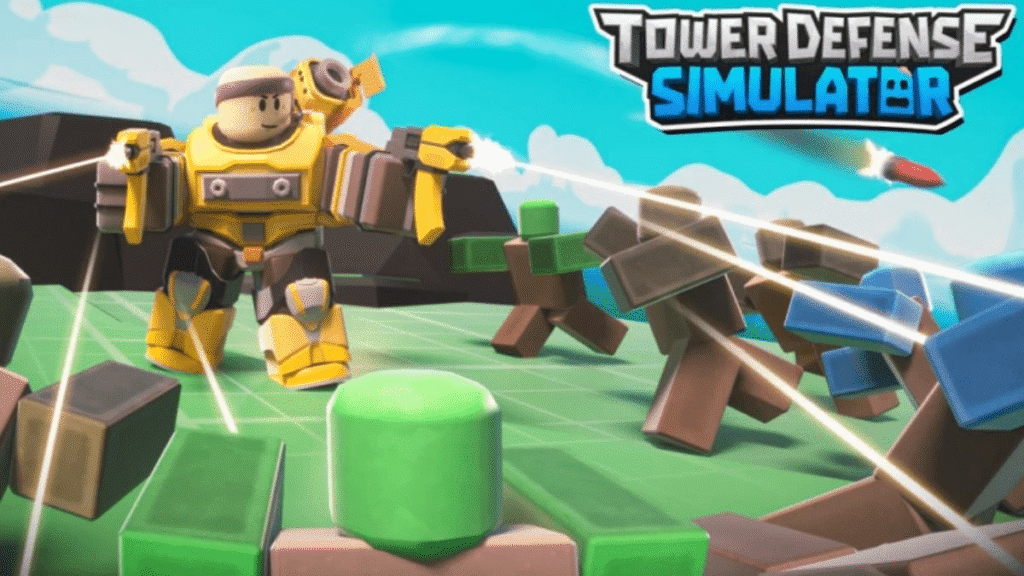
Tower Defense Simulator (often abbreviated TDS) is one of those Roblox games that hooks you fast and doesn’t let go. It looks simple at first — place towers, defend against waves of zombies — but there’s so much depth beneath the surface. Over time, you’ll find yourself tinkering with tower combinations, strategizing for boss waves, and chasing those sweet, sweet upgrades.
In this post, I’ll break down what makes TDS so compelling, how its gameplay loops keep you engaged, what challenges it faces, and tips to get better (or just survive longer). Whether you’re a veteran or curious newcomer, this is a deep dive.
What Is Tower Defense Simulator?
The Basics
Tower Defense Simulator is a Roblox game developed by Paradoxum Games. In it, you team up (or sometimes play solo) to defend your base from wave after wave of enemies. Your toolset? Towers — each with unique abilities, upgrade paths, and roles. You place towers at key points, upgrade them over time, and hope your defenses hold longer than the zombies do.
You earn money (in-game cash) by damaging enemies and through wave bonuses. That money is then reinvested in new towers or upgrades. Once a run ends (if you get overwhelmed or succeed), you gain experience (EXP), coins, and sometimes gems. You use those to unlock new towers, skins, or enhancements.
TDS has multiple maps, different game modes, and rotating boss events. The challenge ramps up quickly, so what works early often fails later unless you adapt.
The Updates & New Mechanics
One of the hallmarks of TDS is that it’s actively developed. For example, there’s now a Skill Tree System where you allocate perks into categories like Offensive, Economy, Strategy, and Defense. This lets you tailor your playstyle.
New towers are also added over time. Recently, an Assassin tower was introduced, which uses slashes and knife throws. Players have been testing its viability in different modes.
Plus, there’s buzz about Ranked PvP — yes, TDS is experimenting with competitive modes now too. This adds a fresh layer beyond just PvE (player vs environment).
That continuous growth helps keep the game alive.
What Makes TDS So Addictive
Strategy Without Overwhelm
TDS balances being approachable and deeply strategic. Early waves are manageable, giving space for new players to experiment. But later waves force you to think: Where should I place this new tower? Is upgrading my existing cannon better or buying a new support tower?
That tension — of resources vs risk — is the core of its appeal.
Social Play & Teamwork
One key to success is teamwork. You can play with friends or join parties. Coordination matters — someone might focus on economy towers, another handles high-damage towers, another on support or crowd control.
Watching a well-oiled team survive 50 waves feels deeply satisfying.
Rewards and Long-Term Goals
The reward loops in TDS are strong. Every run, no matter how short, gives something: XP, cash, maybe a crate or skin or gem. Even runs you lose contribute to your progression.
Because of that, it never really feels like you wasted time. You’re always inching forward.
The thrill of unlocking a new tower or upgrading to its highest level keeps you playing.
Community & Content Creators
The TDS community is loud, active, and creative. There are fan wikis, discussions on Reddit, YouTube guides, challenge videos (“I played 24 hours straight…”), etc.
This kind of external content pulls players in, gives strategies to try, and keeps community engagement high.
Challenges & Criticism
Monetization and Perception
Some players feel the game leans toward monetization. Not necessarily pay-to-win, but features, skins, or event towers locked behind in-game purchases sometimes generate grumbles. A Reddit thread put it like this:
“All the game passes and cosmetics are so that they can keep the game running … I wouldn’t say it’s pay-2-win … but they prioritize monetization a lot.”
The devs have to balance monetization with fairness, which is always a delicate line in free-to-play games.
Balance & Power Creep
As new towers are released, there’s always a risk of some being too strong, overshadowing older ones. Players sometimes feel certain meta towers dominate, making choices feel less meaningful.
Older towers may become obsolete, or maps may favor certain towers more than others. Keeping balance tight enough is a constant task for the developers.
Discovery & Onboarding for New Players
With so many towers, mechanics, and modes, new players can feel lost. The learning curve is real. Without good tutorials or guidance, beginners might struggle to stay engaged.
Community tutorials help, but official in-game onboarding could be stronger.
Performance & Bugs
Roblox’s engine has limitations, and heavy maps or high wave counts can cause lag or stutter on less powerful devices. Optimization is a challenge.
Also, bugs in updates sometimes cause tower interactions to break or misbehave. When the devs push frequent updates, regressions or unintended interactions happen — normal in game dev, but noticeable to players.
Tips & Strategies to Survive Longer
Whether you’re new to TDS or trying to improve, here are some tips to push deeper into later waves:
- Start with a Balanced Strategy
Don’t dump all resources on one tower type. Use a mix:
Damage towers for high DPS
Support or utility towers (slow, stun) to manage crowd waves
Economy towers so you can scale later - Know the Map and Choke Points
Map knowledge is key. Identify where enemies funnel, where you have good lanes to shoot, where crowds gather. Place towers accordingly.
Sometimes a slightly weaker tower at a choke is far better than a stronger tower placed poorly. - Don’t Hesitate on Upgrades
If a tower is already doing well and fits your strategy, upgrading it often gives stronger output than building multiple low-level towers.
But also don’t over-upgrade early — sometimes a new tower gives more value than a marginal upgrade. - Adapt to Enemy Types
Later waves bring special enemies: immune to certain effects, faster, or more resilient. Keep a counter plan. If many enemies resist stun, alternate your tower types. - Use the Skill Tree Wisely
With the new Skill Tree, distribute perks in categories that boost your current strengths. If your strategy is economic growth, invest economy perks early. If you’re playing aggressive, invest offense or defense.
Experiment and re-spec when updates allow. - Watch Events & New Modes
Events often bring limited-time towers or modifiers that shift the meta temporarily. Participate to unlock new toys and gain experience with alternate strategies.
Ranked PvP (if it becomes official) will demand a fresh mindset and perhaps sacrifice some PvE optimizations.
Why TDS Is More Than Just Another Tower Defense Game
Creative Freedom in a Shared Platform
Because it’s on Roblox, TDS bridges user-generated content, social gaming, and strategic depth. Players from all skill levels can jump in, experiment, and share their ideas.
Its success helps show what Roblox can do beyond simple simulators.
A Game That Grows With You
TDS works at many levels. A casual player can enjoy early waves and basic towers. A hardcore strategist can dig into combinations, tower synergies, challenge modes, and leaderboards.
It has room for everyone, and that’s rare.
Community-Driven Longevity
Its updates, events, and direction often seem responsive to community feedback. That keeps trust, engagement, and interest. Players feel they’re part of the evolving world, not just consumers.
The devs listen, iterate, and try new features like the Skill Tree or PvP. That innovation helps maintain momentum.