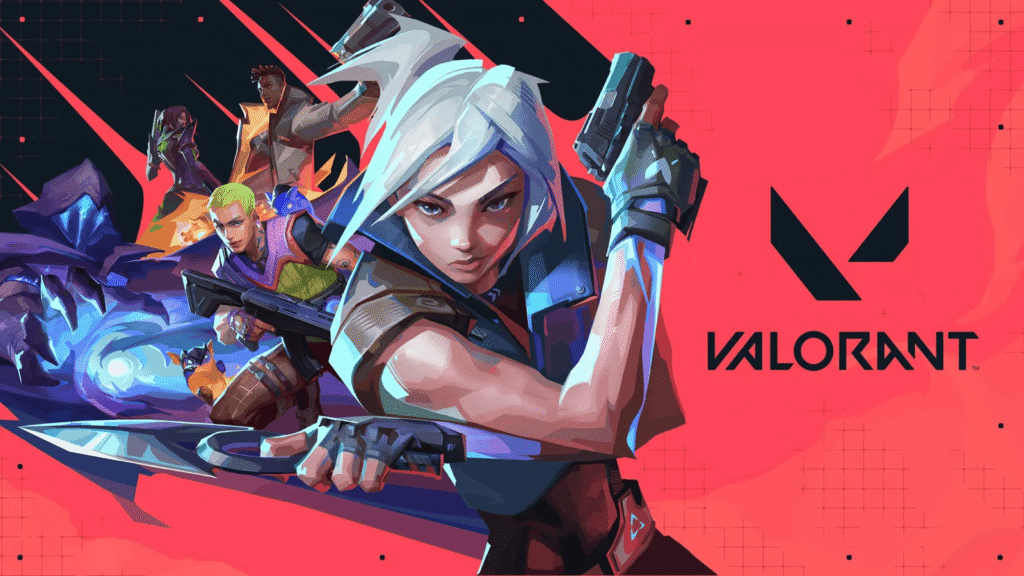
In the world of shooters, few games have shaken things up quite like Valorant. Released by Riot Games in 2020, it entered a crowded genre already dominated by giants like Counter-Strike, Overwatch, and Call of Duty. But Valorant didn’t just copy what worked — it redefined what a tactical shooter could be.
It’s precise, team-based, and deeply strategic — but also flashy, colorful, and unapologetically stylish. Valorant combines the disciplined gunplay of Counter-Strike with the hero-based abilities of Overwatch, creating a hybrid that rewards both sharp aim and clever thinking.
Whether you’re a competitive grinder, a casual player, or an esports fan, Valorant has carved out something unique. Let’s explore what makes it such a global hit.
The Basics: What Exactly Is Valorant?
At its core, Valorant is a 5v5 tactical shooter. Two teams compete — one attacking, one defending — across a series of rounds. The attacking team tries to plant a device called the Spike, while the defending team must stop them or defuse it once planted.
The first team to win 13 rounds takes the match. Each round is short, intense, and requires near-perfect coordination. Unlike fast-paced run-and-gun shooters, Valorant rewards patience, strategy, and communication.
But what really sets it apart are its Agents — unique characters, each with their own abilities and personalities. Instead of faceless soldiers, you play as duelists, controllers, sentinels, or initiators — roles that define how you help your team.
Agents: Where Personality Meets Strategy
Valorant’s Agents are the heart of its identity. They’re diverse, expressive, and designed for all playstyles.
Duelists
These are your entry fraggers — the players who take space, get kills, and start fights. Agents like Jett, Phoenix, and Reyna rely on aggressive play and fast reflexes. If you love being in the spotlight, duelist is your role.
Controllers
Controllers are tacticians who manage sightlines and control space. Brimstone, Omen, and Viper deploy smokes, toxins, or walls to shape the battlefield. A good controller doesn’t just play — they orchestrate.
Sentinels
Defensive experts. Killjoy, Sage, and Cypher lock down sites, set traps, and protect teammates. They’re the backbone of defense and masters of information.
Initiators
These agents break through enemy setups and gather intel. Sova scans corners with his bow, Breach concusses enemies through walls, and Fade haunts the enemy team with shadows.
Every Agent has a signature ability, two purchasable abilities, and an Ultimate — a powerful move that can turn a round upside down. The beauty of Valorant is that no Agent is ever useless; even support roles can clutch a 1v3 if played smartly.
Why Valorant Became a Global Sensation
It’s rare for a new FPS to dominate so quickly, but Valorant had all the right ingredients — skill, accessibility, and polish.
1. The Perfect Mix of Old and New
Valorant feels familiar to anyone who’s played Counter-Strike: you buy weapons each round, manage economy, and play bomb-style objectives. But Riot added personality and creativity through Agents and abilities, breathing new life into the tactical shooter formula.
It’s precise yet unpredictable — a mix that keeps every round fresh.
2. Low System Requirements, High Accessibility
Riot made Valorant run smoothly on almost any PC, from high-end rigs to modest laptops. That inclusivity opened the door to millions of players around the world. Whether you’re in Seoul, São Paulo, or Seattle, you can jump in without needing expensive hardware.
3. Riot’s Experience with Competitive Games
Having built League of Legends into a global esports empire, Riot knew how to design for competition. Valorant launched with ranked mode, anti-cheat systems, and clear communication tools — all things competitive players crave.
4. Constant Updates and Agent Releases
Riot doesn’t let Valorant get stale. New Agents, maps, skins, and balance tweaks arrive regularly. Each update reshapes the meta, forcing players to adapt and keeping the community alive with theory-crafting and experimentation.
The Art of Gunplay: Precision Over Chaos
At its core, Valorant is about aim discipline. It’s not about spraying wildly or relying on luck — every bullet counts.
Weapons feel deliberate and balanced. The Vandal rewards precision with consistent headshot damage, while the Phantom excels in short bursts. Pistols like the Sheriff and Ghost are skill-intensive but rewarding in the right hands.
Valorant’s shooting mechanics demand control — recoil patterns, movement accuracy, and crosshair placement matter just as much as reaction time. It’s why good aimers from games like CS:GO and Apex Legends transitioned smoothly into Valorant’s ecosystem.
Maps: The Strategic Playground
Unlike games where maps are chaotic or oversized, Valorant’s maps are purpose-built for tactical play. Each one offers balance, creativity, and unique elements that make learning them feel like mastering a puzzle.
Haven
A three-site map that rewards smart rotations and unpredictable plays. Attackers have options, and defenders must constantly adapt.
Bind
Features teleporters that allow fast repositioning — but also create chaos. A well-timed flank through a portal can change everything.
Ascent
Defined by its central open area and destructible doors, it’s all about mid control and utility usage.
Icebox, Split, and Lotus
These maps test verticality, team coordination, and creative use of abilities. Each brings its own flavor to the tactical formula.
Every map in Valorant is designed for readability and strategy — no clutter, no random chaos. You learn the angles, memorize callouts, and find new ways to outsmart the enemy.
Valorant Esports: The Rise of a New Generation
From the start, Riot positioned Valorant as a competitive esport. Just months after release, tournaments began popping up globally — and by 2021, the Valorant Champions Tour (VCT) was born.
The VCT brought structure, regional leagues, and international LAN events. Fans quickly found favorite teams — like Sentinels, Fnatic, LOUD, and Paper Rex — each bringing their own style and personality.
Valorant’s esports scene feels vibrant and accessible. It’s not just about aim gods — it’s about smart utility use, communication, and clutch plays. When an entire stadium gasps because someone stuck a Spike defuse at 0.1 seconds, you understand why Valorant works so well on the big stage.
The Skins, Music, and Style Factor
Valorant isn’t just about mechanics — it’s about style.
Riot mastered the art of cosmetics. Weapon skins like Prime Vandal, Elderflame Operator, and Reaver Phantom have become status symbols. The animations, sound design, and finisher effects make every shot feel satisfying.
Music packs, player cards, sprays, and gun buddies let players express personality beyond gameplay. It’s one of the few shooters where aesthetics feel meaningful — not just flashy.
Even the menus, music, and loading screens carry Riot’s signature polish. Valorant looks and sounds premium, without costing players a cent to start playing.
Toxicity, Teamplay, and the Mental Game
No competitive game is perfect, and Valorant has its share of issues — particularly toxicity. Voice comms can get heated, and ranked queues sometimes test your patience.
But Riot’s communication bans, reporting tools, and voice moderation systems have helped keep things manageable. The developers actively address player behavior — something many studios tend to ignore.
At its best, though, Valorant teaches teamwork and patience. Every round is a mix of trust and adaptation — knowing when to take initiative and when to support your squad. Some of the best plays happen not from individual brilliance, but from perfect coordination and timing.
Why Valorant Stands Out
Valorant isn’t just another FPS — it’s a thinking person’s shooter.
It rewards mechanical skill, yes, but it also values mind games. You can fake a site, bait utility, or clutch with smart positioning. It’s as much about predicting human behavior as it is about landing headshots.
For competitive players, that blend of brains and reflexes is intoxicating. For casual players, the variety of Agents and modes keep things fun and accessible.
And for fans, Valorant’s universe — from cinematic trailers to agent lore — adds a layer of connection most shooters don’t even attempt.